
Individually rare but collectively common, rare diseases affect about 1 in 10 people in the United States—roughly the same proportion of the population diagnosed with diabetes. JAX is advancing rare disease research by combining deep expertise in genetics with a commitment to translating discoveries into meaningful outcomes for patients and families.
More than 400 million people worldwide are living with a rare disease. Most of these conditions are caused by genetic changes that are difficult to interpret, poorly represented in existing datasets and understudied across much of the world. Many are severe, and the vast majority have no approved treatment. Across JAX campuses, our scientists study genetic variation, disease modifiers and resilience to understand why individuals with the same mutation can experience very different outcomes—and how those differences can inform new therapeutic strategies.
Americans affected by a rare disease
people worldwide living with a rare disease
rare diseases identified globally
annual cost in the U.S. (2019)
Sources: National Organization for Rare Disorders, The Lancet, Yang et al (2019)
The cornerstone of JAX’s rare disease research is the Rare Disease Translational Center (RDTC), which partners directly with families, clinicians, and foundations to translate genetic discoveries into potential therapies. Ready to be your trusted partner in advancing rare disease research, the RDTC research platform enables partners to work closely with the best thinkers in the rare disease space. Rooted in decades of mouse model expertise, the RDTC’s work spans in vitro modeling and genetic therapeutic development, bringing efficiency and innovation to every stage of preclinical discovery. The mission of the RDTC is clear: Empower rare disease solutions through partnership, innovation and scaled pre-clinical pipelines, to deliver targeted therapies from lab to clinic swiftly and effectively.

“Our research is about more than correcting a single mutation or treating a single patient. It’s about building a new paradigm for how we develop genetic therapies, one that starts with precise cell and mouse disease models, scales through platform genetic therapies and ultimately reaches patients faster.”
- Cat Lutz, Ph.D., MBA | Vice President, JAX Rare Disease Translational Center; JAX Professor and Evnin Family Chair
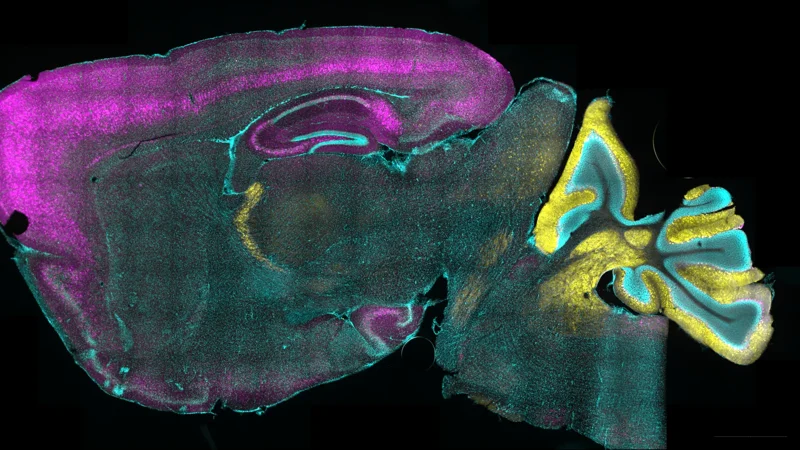
It’s the latest breakthrough from a collaboration advancing gene editing toward real-world treatments for rare diseases.
View more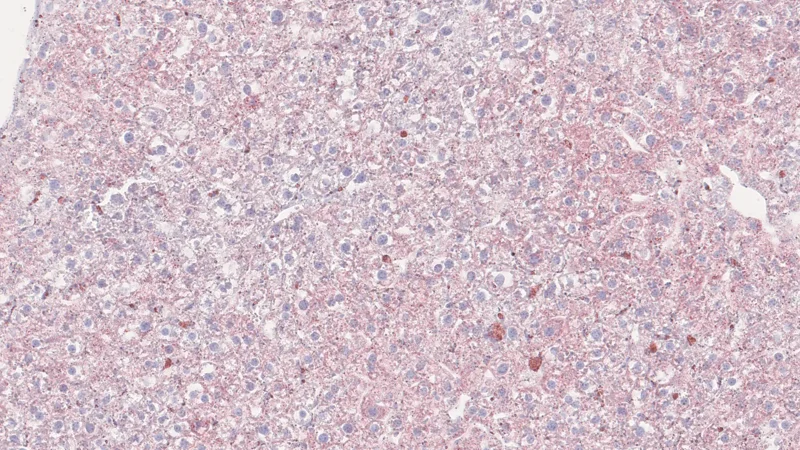
Scientists have corrected an extremely rare and life-threatening genetic disease of the liver in mouse models and human patient cells, using the gene-editing approach that served as the basis for the historic, life-saving treatment of Baby KJ Muldoon in 2025.
View more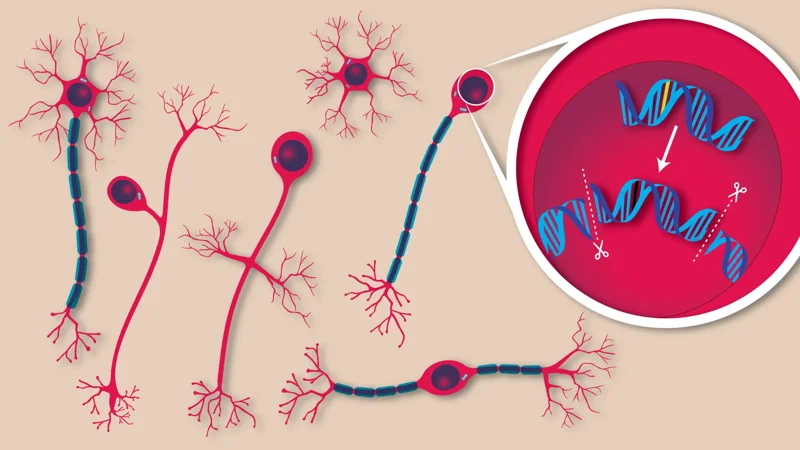
Scientists have successfully corrected gene mutations in mice with an ultra-rare disease by editing DNA directly in the brain using a single injection. This technique, which also showed promise in patient-derived cells, addressed mutations causing alternating hemiplegia in childhood (AHC), reducing symptoms and extending survival in affected mice.
View moreThrough an integrated pipeline that includes cell and mouse precision model development and characterization; therapeutic strategy development encompassing gene replacement, gene editing, and antisense oligonucleotide (ASO) approaches; and rigorous, expert preclinical testing supporting IND-applications the RDTC supports rare disease research and therapeutic translation to clinic. To date, this work has led to more than 80 research programs, the creation of more than 70 novel disease models and collaborations with more than 60 families and foundations.
Support rare disease research
Your gift helps accelerate the search for answers for people living with rare diseases, transforming genetic discoveries into better diagnostics, treatments and hope.

The mission of the RDTC is to empower rare disease solutions through partnership, innovation, and scaled pre-clinical pipelines, to deliver targeted therapies from lab to clinic swiftly and effectively.
View more
The Jackson Laboratory Center for Precision Genetics (JCPG) seeks to create new, precise animal models of incurable and genetically complex human diseases.
View more
The Jackson Laboratory’s acquisition of the New York Stem Cell Foundation unites complementary strengths across mouse, cell and computational models.
View moreIn vivo adenine base editing ameliorates Dravet syndrome phenotypes in a mouse model. Science Translational Medicine (2026).
In vivo base editing rescues liver pathophysiology and peroxisome dysfunction in a mouse model of Zellweger spectrum disorder. Nature Biomedical Engineering (2026).
In vivo prime editing rescues alternating hemiplegia of childhood in mice. Cell (2025).
Stathmin-2 loss leads to neurofilament-dependent axonal collapse driving motor and sensory denervation. Nature Neuroscience (2024).
HLA-DQ8 Supports Development of Insulitis Mediated by Insulin-Reactive Human TCR-Transgenic T Cells in Nonobese Diabetic Mice. Journal of Immunology (2023).
JAX research extends far beyond any single disease area.

Learn about the complexity of rare disease and the unique challenges it presents to patients and families. Explore the patient journey—from diagnosis to research to drug development.

Improve rare disease diagnosis and patient care through education on genomic testing, variant interpretation and evidence-based clinical decision-making.
View more