
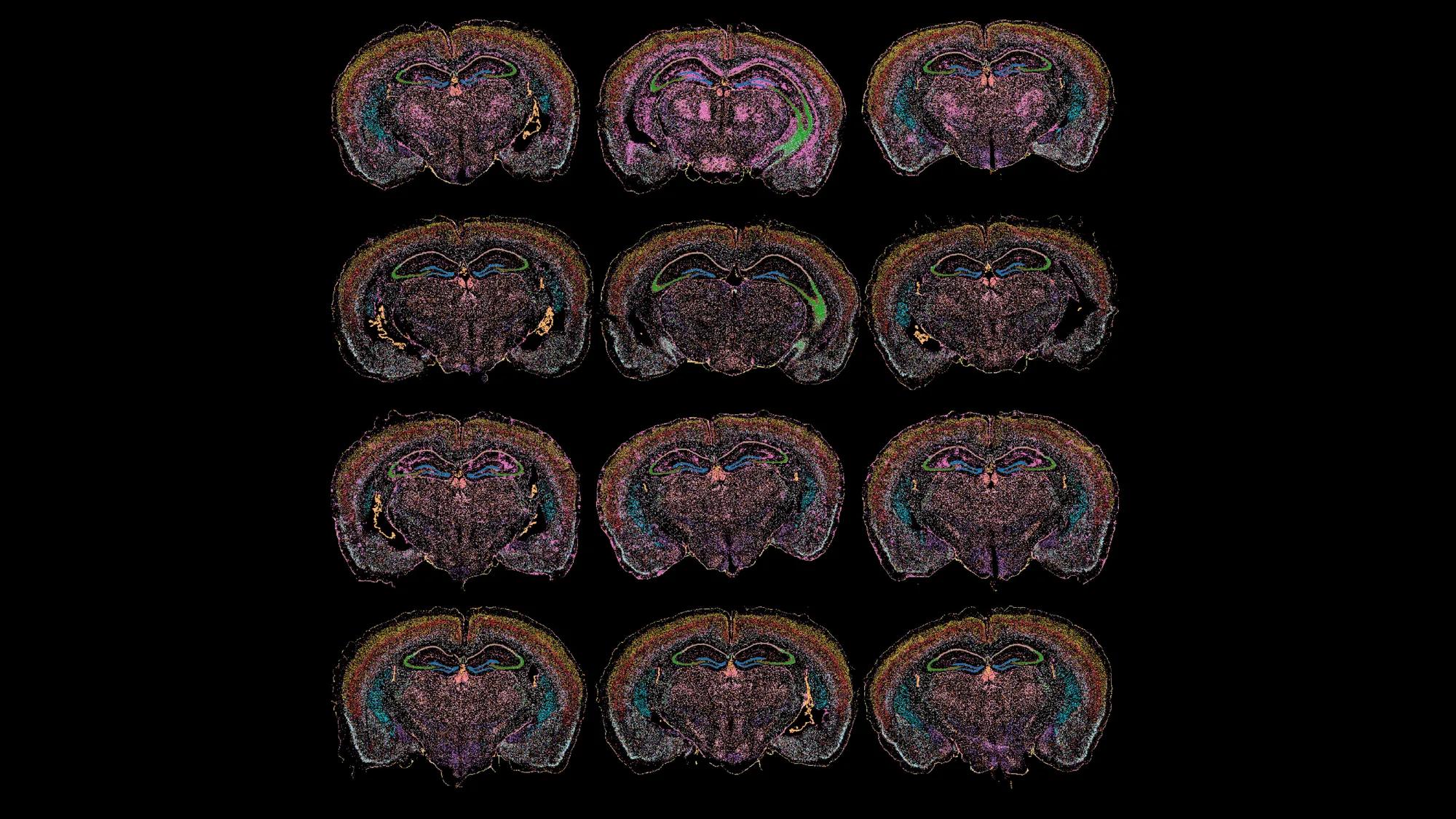
Alzheimer’s disease is a neurodegenerative condition in which brain cells gradually lose function, disconnect from one another and die. It is marked by the gradual dysfunction and loss of neurons, along with abnormal buildups of amyloid plaques and tau tangles in the brain. Over time, a person suffering from Alzheimer’s disease undergoes widespread shrinkage of the brain, known as cerebral atrophy, which involves the loss of neurons and the connections between them. It often starts in the memory center of the brain, including the hippocampus and entorhinal cortex and then spreads to areas involved in language, reasoning and other cognitive functions. Research increasingly suggests that Alzheimer’s begins long before diagnosis—making early detection and predictive modeling essential.
Sources: The World Health Organization, National Institute on Aging (NIA), The Alzheimer’s Association, The Mayo Clinic
There is no single routine office-based test that definitively identifies Alzheimer’s disease, and its earliest symptoms are often subtle and easily confused with other causes of cognitive change. As a result, many people are diagnosed only after significant brain changes have already occurred. Improving early detection and building research models that more accurately reflect the biology of human Alzheimer’s is critical to finding more effective ways to prevent, slow and treat disease progression.
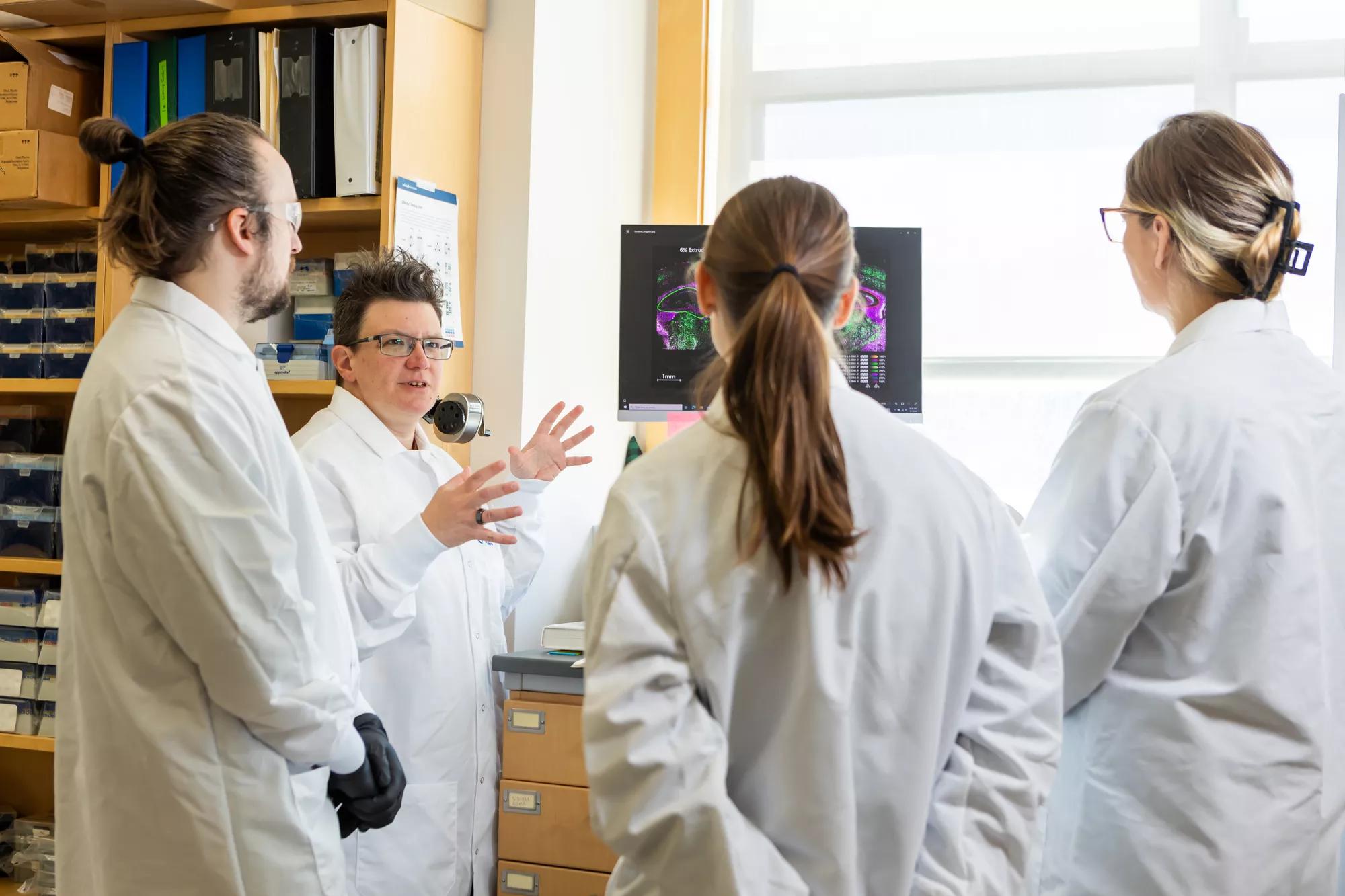
At JAX, our scientists are advancing Alzheimer’s disease research by uncovering the fundamental biology that drives disease onset and progression—helping to understand why some individuals remain resilient despite risk and are more vulnerable to disease progression. Despite decades of study, the underlying mechanisms of Alzheimer’s remain incompletely understood. JAX scientists are working to change that.
Through the JAX Center for Alzheimer’s and Dementia Research and the JAX–NYSCF Collaborative, teams of scientists are using cutting-edge approaches—including genetically precise mouse models, patient-derived stem cells and advanced computational analysis—to study Alzheimer’s across systems. By generating human brain cell types such as neurons, microglia and astrocytes from patient samples, researchers can model the disease in real time and observe how molecular pathways become disrupted. By integrating mouse and human data with scalable, high-throughput technologies, JAX researchers are identifying key cellular and genetic drivers of Alzheimer’s. This work is laying the foundation for earlier detection and more predictive, personalized approaches to treatment.
Support Alzheimer's disease research
Your gift helps JAX researchers uncover the biological drivers of Alzheimer's disease, accelerating discoveries that improve diagnosis, advance new treatments and bring hope to millions of families.
By studying lipids, Kristen O’Connell is uncovering how memory breaks down over time and how to preserve it.
View more
What if a routine eye scan could tell a doctor if you were at risk of Alzheimer’s disease? Gareth Howell is exploring how genetics shape the way our eyes—and brains—age.
View more
Beyond the Barrier tells the stories behind the science — where JAX's discovery platform unlocks new frontiers of disease research.
View more