
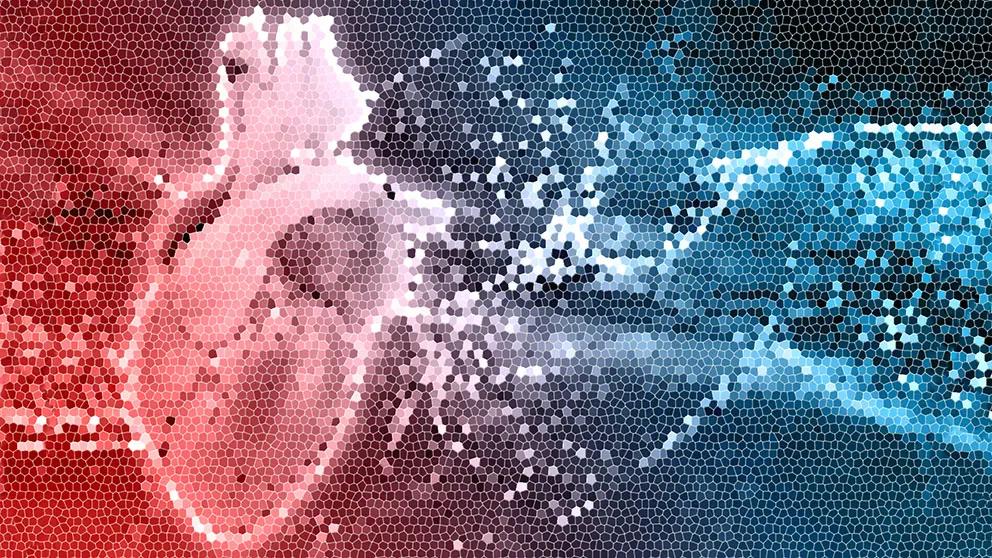
The underlying causes of cardiovascular disease vary by condition. Many of them are linked to a condition called atherosclerosis. Atherosclerosis occurs when plaque, made up of cholesterol, fats, calcium and other substances, builds up inside the arteries. Over time, this can narrow the arteries and reduce blood flow. If a plaque ruptures, a blood clot can form and block blood flow completely. This can lead to a heart attack or an ischemic stroke.
Sources: World Health Organization (WHO), Centers for Disease Control and Prevention (CDC)
Travis Hinson, a clinical cardiologist and scientist at JAX and UConn Health, studies the genetic basis of inherited cardiovascular disease. His laboratory uses mouse models and human stem cells to investigate how disease-causing genetic variants affect the heart and to evaluate gene-editing and other precision-medicine approaches.
Nadia Rosenthal, professor and scientific director at JAX in Bar Harbor, Maine, studies how growth factors, stem cells, and the immune system influence the development, regeneration and repair of heart and skeletal muscle. Her research uses genetically diverse mouse models to examine the roles of aging, cellular interactions and immunity in cardiovascular disease.
In 2025, Hinson and Rosenthal joined a team from the JAX-NYSCF Collaborative awarded up to $30 million to develop AI-powered “virtual hearts” for drug safety testing. The CARDIOVERSE project combines artificial intelligence, stem cells and genetic variation research to predict drug safety before human trials. The team is co-led by JAX researchers Matt Mahoney and Paul Robson and NYSCF’s Daniel Paull, a leader in high-throughput stem cell technologies.
Support JAX science
Your gift advances research into the genetic and biological causes of heart and vascular disease, leading to more precise prevention, treatment and healthier lives.
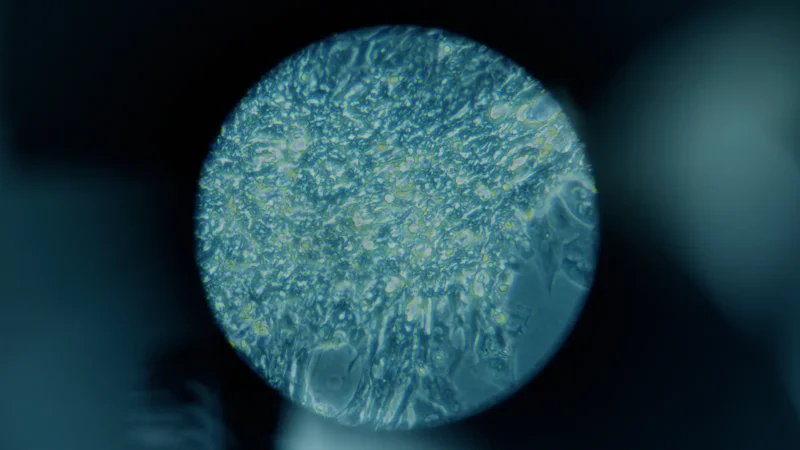
The Travis Hinson Lab at The Jackson Laboratory is leading the charge toward breakthroughs in cardiovascular disorders that lead to heart failure.
View more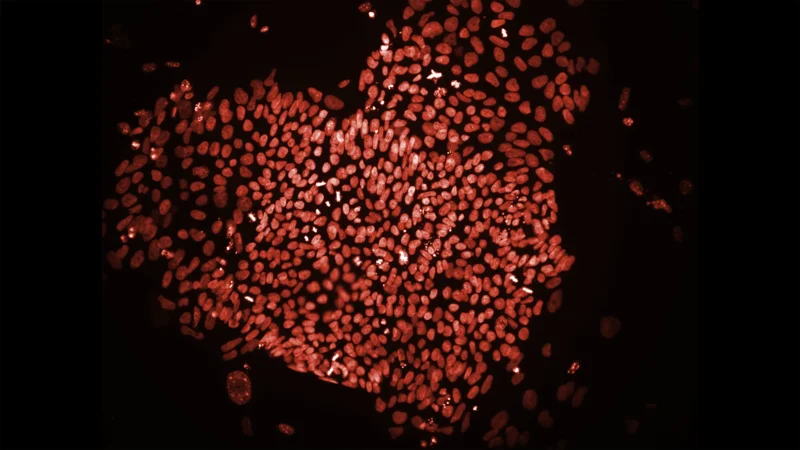
New CARDIOVERSE project combines AI, stem cells and genetic variation to predict drug safety before human trials.
View more