
Stronger together: Fueling the future of medicine
Article | November 25, 2025
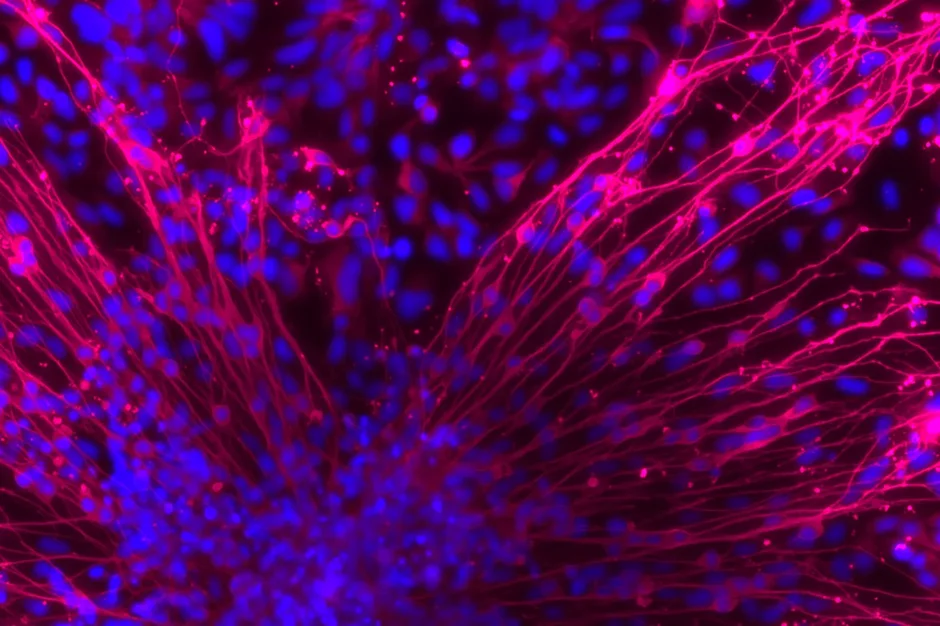
Together, JAX and NYSCF combine strengths in genetics, stem cells and data science to accelerate discovery and deliver solutions that will make a lasting difference for patients around the world.
Aging
Scientists in the JAX Center for Aging Research are uncovering how biology and genomics shape the aging process. JAX Professor and Evnin Family Chair Ron Korstanje studies the genetics of kidney function and disease through the lens of aging, while other JAX researchers use behavioral and multi-omic analyses to identify the earliest signs of decline in animal models. The team is eager to collaborate with NYSCF’s Stefan Semrau, vice president of computational biology and data science, whose group develops and applies advanced tools to unravel the role of genetics in disease and improve the stem cell models of various diseases.
Alzheimer’s Disease
Alzheimer’s is the sixth leading cause of death in the United States and yet it remains poorly understood. JAX Professor and Bernard and Lusia Milch Endowed Chair Greg Carter is working at the intersection of patient, non-human primate, mouse and cell models to develop potential therapies. In partnership with NYSCF scientists Daniel Paull and Valentina Fossati, as well as collaborators at Brigham and Women’s Hospital, Carter’s team is building new cell models of dementia from genetically diverse people with Alzheimer's. This approach enables large-scale studies on how genetics influence disease onset and progression while also identifying new risk-related genes. Using these models at scale, researchers can rapidly test precision therapeutics and accelerate the path from the laboratory to the clinic.
Cancer
More than half of JAX faculty are members of the National Cancer Institute-designated JAX Cancer Center led by Director Karolina Palucka, Edison T. Liu Endowed Chair in Cancer Research. That includes Professor and Dattels Family Chair Jennifer Trowbridge who studies hematopoietic stem cells (HSCs) — rare, multipotent stem cells that occur naturally in the bone marrow and are responsible for the production of blood cells and platelets. Trowbridge is investigating how HSCs change with age and what makes them turn into leukemia cells. NYSCF scientists, including Laura Andres‑Martin, are also at the forefront of cancer research — generating self‑renewing tumor avatars (called organoids) from patient tumors to better study cancer biology in a patient’s individual tumor. These combined efforts are opening new doors for faster, more precise cancer therapies.
Diabetes
In type 1 diabetes, the immune system destroys the beta cells in the pancreas responsible for producing insulin. In type 2 diabetes, cells stop responding to insulin, and the pancreas produces less insulin over time. JAX and NYSCF researchers are dedicated to uncovering diabetes causes and finding a cure for the disease, not just treatments for its symptoms. Leading the type 1 diabetes efforts are NYSCF Principal Scientist and Lisa Dean Moseley Foundation Fellow Paula Alonso‑Guallart and JAX Professor David Serreze. Heading the type 2 diabetes research are NYSCF Senior Principal Scientist Filippo Cipriani and JAX Associate Professor Michael Stitzel. Together, this combined, complementary expertise will accelerate research in these diseases that affect so many.
Multiple Sclerosis
MS is a chronic neurological disease in which the immune system attacks the nervous system, causing symptoms like fatigue and cognitive impairment that can worsen over time. After being diagnosed in 2009, NYSCF Senior Research Investigator Valentina Fossati turned her research toward MS. She has pioneered methods to convert patient stem cells into all major brain cell types and, by building living models of the brain in a dish, Fossati is uncovering the role these cells play in disease. Her goal is accelerating drug discovery and potential cell replacement therapies. At JAX, scientists in the Pera lab are using cells to help better understand other neurodegenerative diseases and to identify genetic factors that influence regeneration and repair in the central nervous system.
Rare Diseases
Though each affects fewer than 200,000 people, there are more than 7,000 rare diseases that impact roughly 30 million Americans — the same number as type 2 diabetes. Understanding the genetics of rare disease offers unparalleled insight into human biology and common diseases such as cancer, diabetes, and Alzheimer’s. As vice president of the Rare Disease Translational Center at JAX, Cat Lutz uses both mouse models and stem cell models to understand and treat rare diseases. NYSCF scientists harness stem cell models of rare diseases to identify disease mechanisms, screen drug candidates, and repurpose existing therapies. By uniting scalable stem cell platforms with proven mouse model expertise, JAX and NYSCF together can accelerate progress for patients who currently have few options.
Learn more

Introducing a new era of biomedical discovery
Together, JAX and NYSCF combine strengths in genetics, stem cells and data science to accelerate discovery and deliver solutions that will make a lasting difference for patients around the world.
Scope. Speed. Scale.
The bold new alliance between The Jackson Laboratory (JAX) and The New York Stem Cell Foundation (NYSCF) promises to transform biomedical research and bring life-changing therapies to patients faster than ever before.
View moreFeatured in Search
Search magazine is a publication from The Jackson Laboratory focused on research discoveries and human health.